14Jul

Enhancing Postoperative Monitoring: The Role of AI Wearable Technology.

The worldwide use of surgical treatments is increasing, with approximately one in ten people undergoing a surgical procedure each year in high-income countries. Following discharge, patients must take charge of monitoring their own recovery. However, this self-observation can lead to missing critical complications. Over 10% of patients over 45 years old experience postoperative complications, often requiring readmission and associated with increased mortality. These major complications include postoperative pain, joint clicking, and other subtle signs. Proper postoperative monitoring is crucial to ensure optimal recovery and prevent adverse outcomes.   These major …
12Jul

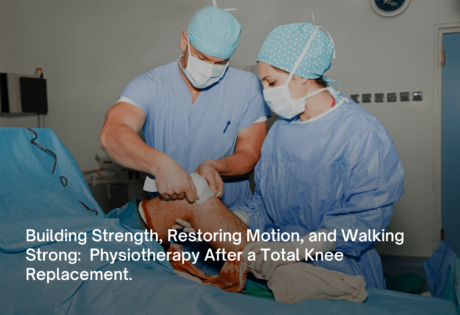
Building Strength, Restoring Motion, and Walking Strong: Physiotherapy After a Total Knee Replacement.

Surgery is most definitely a scary thing, terrifying in fact. Having to imagine a person cutting your body while you’re asleep, yikes! Sounds like something you pull out of a horror movie! But in reality, it isn’t all that bad, considering the overwhelming benefits one may receive afterwards.    There are thousands of different types of surgeries out there, but for now, let’s talk a little bit about total knee replacement (TKR). When it comes to a total knee replacement, your surgeon aims to make the patient’s quality of life …
10Jul

Physiotherapy’s Ticking Time Bomb – The Hunt for Second Opinions.

When someone gets injured, what goes through the mind of the patient? Fortunately, it doesn’t take advanced psychology to figure out the immediate questions that arise. It roughly goes in this sequence – how bad is it? Will it get better soon? How fast can I resume with my normal life? Will I need extensive medical care? Can I afford that treatment? (Unless you have health insurance or are rich enough!)   These questions are no different for a physiotherapy patient. The constant race to get the best possible treatment …
07Jul

Wagging Tails and Happy Hearts: The Positive Effects of Animal-Assisted Therapy.

12,000 years ago, a human skeleton holding a puppy was found in Israel. Sometimes, our furry friends bring out more than a human can. At times, individuals quite literally pet their problems away.  Animal Assisted Therapy (AAT) is a type of therapy that involves the use of trained animals to provide emotional support and therapeutic benefits to people suffering from various mental health conditions. The purpose of AAT is to improve the emotional, social, and cognitive functioning of individuals, by using animals as a tool to engage and motivate them. …
03Jul

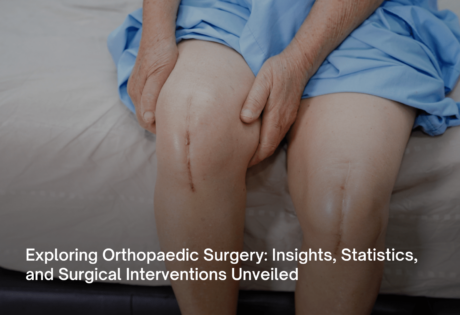
Exploring Orthopaedic Surgery: Insights, Statistics, and Surgical Interventions Unveiled

It’s an obvious human emotion to get scared of the word “OPERATION” or  “OPERATION THEATRE” and this article is exactly about Embracing the Unknown: Exploring the Mysteries of the Operation Theatre. Orthopaedic surgery plays a critical role in the management of various orthopaedic conditions, including congenital disorders, acute injuries from road traffic accidents, acquired disorders, and chronic arthritic or overuse conditions. Although the idea of surgery can be daunting, understanding the significance of orthopaedic interventions backed by statistical evidence is crucial. In this article, we will explore specific orthopaedic scenarios, …
28Jun

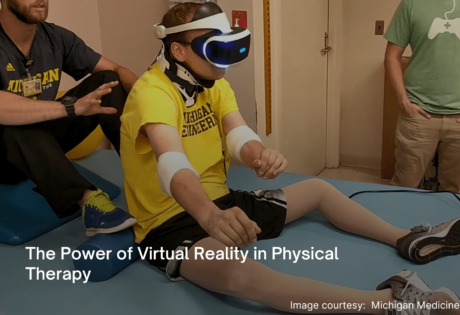
The Power of VR in Physical Therapy.

As a physical therapist, I have witnessed firsthand how the field of physical therapy is constantly evolving and am always on the lookout for new and innovative ways to treat patients and educate them. Every day, new modalities and techniques emerge that can help us better serve our patients and improve their outcomes. One such modality that has been gaining traction in recent years is therapeutic virtual reality (TVR). With its ability to create immersive digital environments that simulate real-world scenarios, TVR has the potential to revolutionize the way we …
26Jun

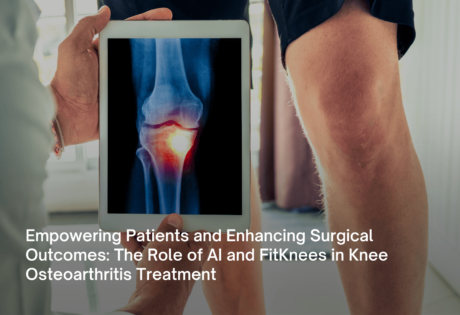
Empowering Patients and Enhancing Surgical Outcomes: The Role of AI and Fitknees in Knee Osteoarthritis Treatment

As medical professionals, we are well aware of the profound impact that osteoarthritis has on the lives of our patients. With an aging population and increasing rates of obesity, the prevalence of knee osteoarthritis continues to rise, affecting millions of individuals worldwide. The debilitating pain, limited mobility, and compromised quality of life experienced by these patients underscore the urgent need for effective interventions.    However, one major challenge healthcare providers face is convincing patients who are genuinely suffering from pain and discomfort to consider total knee arthroplasty (TKA), or total …
19Jun

Revolutionizing Physiotherapy: Bridging the Data Gap for Enhanced Treatment Outcomes

For some industries, numbers often shape narratives. For some, they even form the base of informed decisions! The most obvious example would be engineering – where no math would mean absolute chaos. And yet, the most important of such industries would also include healthcare and by extension, physiotherapy.    Unfortunately, for an industry that’s focused on better attending to people, physiotherapy never really got around to adopting data. Turns out, only 33% of physiotherapists use Electronic Health Records (EHR) for data documentation, and less than 20% of all practices have …
12Jun

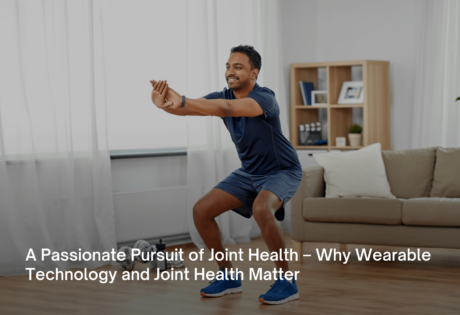
A Passionate Pursuit of Joint Health – Why Wearable Technology and Joint Health Matter

As we lead our lives day by day, we sometimes take a few things for granted, joint health being one of them. We often take for granted the simple movements that allow us to walk, run, and jump. However, for many people, joint pain and discomfort can make these simple actions a painful and difficult experience. At our company Ashva , we are passionate about knee health and joint health because we understand how critical these joints are to maintaining an active and fulfilling lifestyle. Whether you are an athlete …
09Jun

6 Surprising Fallacies About Knee Pain – Debunking Myths for Optimal Recovery.

As a physiotherapist, you understand the challenges involved in treating knee pain. Patient misconceptions can complicate matters, as outdated or false information can hinder their recovery. Educating patients is crucial to achieving the best outcomes. In this article, we’ll address six common fallacies about knee pain, debunking these myths and emphasizing the importance of evidence-based approaches for successful treatment and improved quality of life. Fallacy 1: Persistent knee pain is always due to arthritis, and arthritis only. Reality: Knee pain can stem from various factors, making it illogical to solely …
05Jun

Unveiling the Complex Relationship between Knee Conditions, Gait Cycle, and Joint Health: The Role of Fitknees in AI-Powered Gait Analysis

Discovering the intricate connection between knee conditions, the gait cycle, and overall joint health is essential in understanding the impact of knee health on daily functioning. With lifestyle changes affecting joint health more than ever, this article explores how knee conditions directly influence the gait cycle and contribute to pain and discomfort. Emphasizing the significance of knee health in recent years, we introduce Fitknees, an AI-powered device that revolutionizes gait analysis. Fitknees’ ability to provide precise insights within a minute enables healthcare professionals and individuals to assess gait patterns and …
02Jun

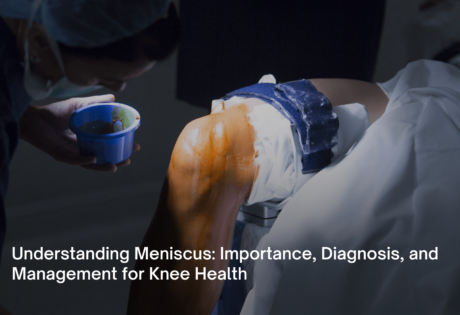
Understanding Meniscus: Importance, Diagnosis, and Management for Knee Health

Introduction and Background The meniscus, once considered a functionless remnant of leg muscle, has been recognized in recent decades as a vital structure of the knee joint. Scientific investigations have highlighted its anatomical, biomechanical, and functional importance. The incidence of meniscal injuries is increasing, partly due to the growing participation of youth in sports activities. Magnetic resonance imaging (MRI) remains the preferred imaging modality, and surgical management is the primary treatment for meniscal tears. Arthroscopic partial meniscectomy (APM) is currently the most commonly performed orthopedic procedure worldwide. However, recent studies …