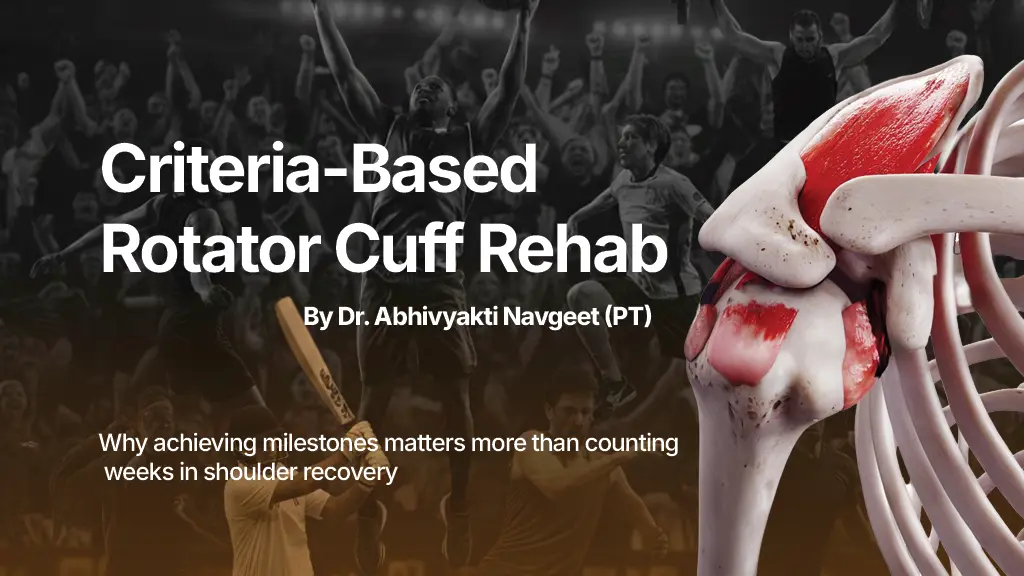
Criteria-based rotator cuff rehabilitation showing shoulder biomechanics, tendon loading, and clinical progression18Dec

Criteria-Based Rotator Cuff Rehabilitation: From Tissue Protection to Return to Sport

Rotator cuff rehabilitation has traditionally followed time-based protocols, progressing patients through predefined phases based on weeks post-injury or surgery. However, tendon healing and neuromuscular recovery do not respond to time alone—they respond to load. A criteria-based rehabilitation approach prioritizes measurable clinical milestones to guide progression safely and effectively, particularly in athletic and high-demand populations. This article outlines a phase-wise, criteria-driven framework for rotator cuff rehabilitation, as explained by Dr. Abhivyakti Navgeet (PT). Why a Criteria-Based Approach Matters The rotator cuff functions as a dynamic stabilizer, responsible for centering the humeral …
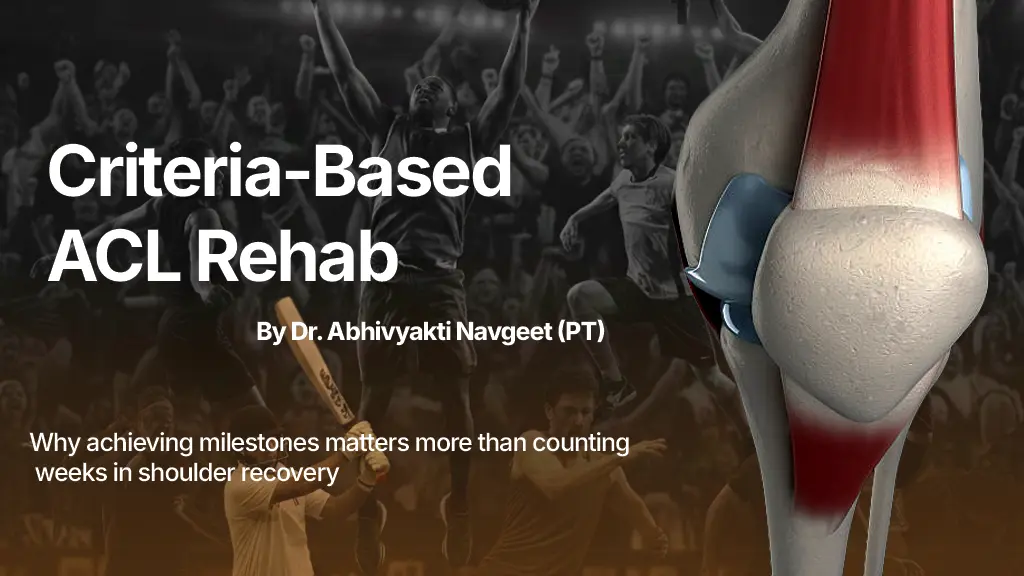
Criteria-based ACL rehabilitation showing knee biomechanics and ligament loading for return to play decision-making18Dec

Criteria-Based ACL Rehabilitation: Objective Progression and Return-to-Play Decisions in Athletes

Return-to-play (RTP) following anterior cruciate ligament (ACL) reconstruction remains one of the most critical decisions in sports rehabilitation. Traditional time-based protocols offer general guidance, but they do not account for individual variability in healing, neuromuscular control, or psychological readiness.   https://youtu.be/aqcqAxOpQEs   A criteria-based rehabilitation model emphasizes objective progression markers to guide clinical decision-making and reduce re-injury risk. Early Rehabilitation Priorities The initial phase of ACL rehabilitation focuses on restoring foundational joint function and controlling post-operative symptoms. Key clinical objectives include: Restoration of full knee extension Reduction of pain and …